Tuesday, November 25, 2014

Interesting Fact! Sword Swallowing

Sword swallowing is an ancient practice that involves people inserting swords through their digestive tract. This skill originated from southern India and is still practiced to this day. Now, how could one possibly put a sword into their mouth without getting injured?


Sword swallowing is performed by the person hyper extending their neck by craning their neck skyward. They do this because the upper gastrointestinal tract isn't straight in it's resting state. Sword swallowers usually bring the sword as deep as their stomach. There are many tricks to performing this such as swallowing the swords sheath before or even consuming a large meal or drink prior to performing the swallow so that the esophagus is more flexible.


As you just saw there are many techniques that refined this strange practice to this day such as lubricating the swords blade before swallowing. I chose this topic because i's something I have always found this art to be strange and wanted to know how it worked. This art shows how one can manipulate the digestive system in order to perform such things. And the only questions I could possibly have is why this art is even practiced, and how can people do it so easily especially when people ingest numerous amounts of swords at one time.


Animation: Organ of Digestion Quiz

Digestive System T-Shirt

Biological Molecules Lab

Lipid Test

Glucose Lab before heating with Benedict's Solution

Starch test

Glucose Test during heating

The test tubes after being heated

Questions

1. The bread, apricot, and apple tested positive, due to having different solid colours.

2. Glucose serves as the energy portion of Cellular Respiration, which helps to produce ATP.

3. The bread and dorito chip were positive in the test. The iodine turned them black which is how we came to our conclusion.

4. Starch is made up of glucose and exhibits a similar structure to the primary form of proteins

5. 


6. Oil was the only food that tested positive to being fat, as it was the only one that dried up.

7.  Lipids are the same as fat, they help to keep the body warm and insulated.

8.  The building blocks that make up a triglyceride are called glycerol. There are known to have 3 fatty acid tails.

9.  Nuts such as peanuts, cashews or walnuts are known to be high in protein.

10.  Amino acids are the building blocks, or monomers, of proteins.

11. Proteins functions are that they provide the structure, and regulate body tissues. There are many types of proteins, like antibodies, structure, and transport proteins.


Monday, November 17, 2014

Tin Foil Protein Structure

Structure #2

Structure #3

Structure #4


Questions

1. The bond found in the primary structure is the peptide bond.


2. The secondary structure is formed by polar peptide bonds formed between amino acids


3. My protein looked different because i chose different letters than everyone else or rearranged them differently


4. The fourth structure is formed by two proteins bonding together


5. No, proteins would not be the same, due to different combinations of acids and peptide bonds forming.

Methionine

Proline


Friday, November 14, 2014

Colon Cancer Surgery

The Sunnybrook colon cancer live tweet was a great, and horrifying experience. Although I didn't watch all of it due to utter disgust, I learned so much from the parts I did watch. For example, I never knew they used staples and sewing string for surgery. I thought it was much more advanced and civilized. I'm amazed at how surgeons are able to withstand the terror and be so precise and accurate in there surgeries. The pinnacle of it for me was when they finally removed the colon, it was so large and to only imagine that the small intestine is several times larger is insane! Overall this was a great learning tool and really helped me understand what we've been going over in class due to all the questions they answered on there twitter.


                              My ambivalent part of the Sunnybrook colon cancer live tweet

Friday, November 7, 2014

Osteoporosis

Having a friend who had brittle bones (osteoporosis), in elementary school, I decided to do my post on it. Osteoporosis is a bone disease that causes the pores in them to be much larger than normal. These extra gaping pores lower the overall sturdiness and strength of all bones affected. Bones that are inflicted with osteoporosis also easily break meaning that even if you bump into someone it can cause a fracture.


Here is a comparison of normal bones and bones that are affected by osteoporosis. Due to osteoporosis not having any visual symptoms, beside bone density, it is difficult to determine if someone has it or not. However, if an individual breaks or fractures their bones, where a healthy person wouldn't than it can be deemed as osteoporosis. One way to help deal with it is steroids or anticonvulsants, however research is being done to find other ways to help combat osteoporosis.

Tuesday, November 4, 2014

Respiration Lab

The two test tubes of lemon lime before addind CO2 and aerating the control tube on the left. Both liquids are clear, like water.

After exhaling CO2 into the right tube, we noticed that the lemon lime liquid turned into cloudy white, as the control one remained the same.

This was the result of constantly exhaling CO2 into one beaker with 25mL of distilled water and aerating the other one. The CO2 one turned yellow after adding the pH identification liquid and the aerated one turned green. This shows that the CO2 beaker is more acidic than the other.

Tuesday, October 21, 2014

Interesting Fact! Horse Respiratory System


Unlike most other mammals, horse exhibits a rather strange respiratory system, they breathe only through their nose rather than their mouth + nose. Their respiratory system is completely separate from the digestive system.


As shown by the picture air, goes through the nasal passage, while food travels through a completely separate system. They have a flap which completely cuts off any oxygen from entering through the oral cavity while breathing. It only opens during ingestion, where it also seals the nasal passage
Even if the horse was unable to breathe through its nose, and faced with death, it will not use its mouth to breathe.

Monday, October 20, 2014

Fitness Testing Results

Aerobic Fitness
Beep Test
Anaerobic Glycolysis
Step-Ups
ATP CP System
Weight Lifting
Flexibility
Splits
Power
Plank
Agility
Box Test


Goal
To improve my core strength, so I can last 2-3 minutes doing core exercise such as planks

Exercise 

  
This workout seems a little unrealistic for me, so I'll make some modifications such as removing the reverse crunches and maybe adjusting some of the reps until I'm comfortable with doing the suggested amounts.


Balloon Lung

Deflated

Inflated


Wednesday, October 15, 2014

Interim Report

Hi Mom and Dad!
This is my interim report for the Human Kinetics Coop.

So far, the highlights for me have been: Woo Kim Taekwondo


I am the most proud of: My progress so far


The most interesting things I have learned about are: How the blood flows throughout the body to keep muscles and everything else energized


An example of when I really pushed myself in SuperFit is: The Beep Test, where I tied my highest score.


I could make improvements in: Fitness Days


I am really looking forward to: Future field trips and events


The Basics - WORK HABITS:

Attendance (classes missed and why) - 1-2 absences due to illness

Participation in field trips (woo kim, grouse grind, rock climbing) - went to all of them

Lates (how many & reasons) - 2-3 times due to going out to get food

Preparedness for class (gym strip &/or supplies) - always

Class time management (are you using your class time to complete your work?  engaged in class discussion? participating? following along? doing your best? or talking too much? ) - I feel I usually use my class time well, however there are some cases where I chat and disrupt the class, but i try to limit it as much as  possible.

Blog assignment completion - (out of 8 assignments) Comments? I've completed 7/8 assignments due to it being partnered work. I look forward for future blogs

Self evaluation of work habits for each class in coop - G/S/N

Biology 12: G
Exercise Science 12: G
Super Fit 12: G


Tuesday, October 14, 2014

Heart Dissection


External Anatomy

(External Human Heart)


(Labeled External Heart Diagram)


Observations
The heart looks to be very tough, yet squishy. The arteries and veins seem cartilage-like and are white in colour, opposed to the red exterior of the rest of the heart.


Internal Anatomy

(Interior Human Heart)


(Labeled Interior Heart Diagram)


Observations
It was tough to cut through the hearts more meaty parts like the septum and the tissue surround the left and right ventricles. Upon looking inside, it is easy to distinguish the Chordae tendineae. The valves were relatively hard to spot and the left and right ventricles were much smaller than expected.
The entirety of the inside of the heart was pink with the top aorta being white.


Questions:
What was the most surprising thing about dissecting the heart?  Describe what your expectations were and if they were met.
(Did not participate in dissection)
Why are the atria and ventricles so different (compare their structure to their function)?
Atria and ventricles are so different because the ventricles are responsible for pumping the blood out to the body, while the atria only need to hold the blood and pump it to the ventricles


Why is the left ventricle more muscular than the right?
The left ventricle is more muscular because it needs to pump the blood to the entire body, as the right ventricle just sends blood to the lungs to get oxygenated


What are function of the heart valves?  Describe how the structure of the valves relates to their function (including chordae tendineae).
The valves make sure blood only flows one way, the open when blood needs to go to the ventricle and the other valves open when blood from the ventricles needs to pump through the pulmonary artery and aorta. They all keep blood from flowing the wrong way.


Use one of your pictures to trace the path of blood through the heart (add arrows?)


Grouse Grind

a)  Describe the physiological response of your body to the exercise (heart rate? breathing rate? capillary dilation? body temperature? muscular fatigue? what hurt?  what was your limiting factor - why couldn't you go faster?)


During the grouse grind, I was sick and unable to work at my max, however, what I did experience during my trials was intense. Running up the mountain at that incline and through the various obstacle such as roots, loose rocks, and the nails in the steps was impossible. Walking too was hard to do, especially after running, while walking I could definitely feel the build up of lactic acid with every step. My heart rate was high, but not something like a beep test, and I was definitely sweating. Although I was only able to make it halfway, I felt all the symptoms the grind could give and hope to complete it at a later date.


b)  You have cut and paste notes about the 3 energy systems - what energy systems were you using during the grouse grind and how do you know?  (hint: more than one!)


The two energy systems used were the Anaerobic Glycolysis and the Aerobic systems. I could tell it was these systems, due to the intense burn of the lactic acid I felt and the muscle fatigue, pain and lack of function I experienced while running, and walking.

VO2 Max

My VO2 Max score was 51.7


According to the rating chart, my VO2 Max is highly above average and right under good.
(for an 18 year old male)

Thursday, September 25, 2014

Weight Room #1

September 24th, 2014

20 minutes bikes
Hammer Curls 3 sets 6-8 reps
Preacher Curls 3 sets 6-8 reps
Bicep Curls 2 sets 10-12 reps

Heart Structures and Functions


Labeled Image of Heart


Tuesday, September 23, 2014

Human Kinetics CO-OP

Hi, I'm Moeize. I have one brother his name is Zyuun, he's in Grade 11. I enjoy playing video games, watching movies, playing sports, drawing and listening to music. I joined co-op because I'm interested in becoming a chiropractor, or something like that.


Monday, January 20, 2014

Biology Self-Assessment

Assignment Completion- Weight 30%
Letter Grade: B

In the plant unit, I failed to complete a few major blogposts, however I made sure to do everything listed in the plant unit, and I believe I may have missed 1 or 2 posts in the bacteria/virus unit. Otherwise, the other assigned projects, notes, worksheets, and stuff I believe are mostly completed.

Assignment Quality- Weight 40%
Letter Grade: A

I feel that although I may not have completed every blogpost, the ones I have done I've done to the best of my capabilities. I've completed them carefully and thoughtfully, although I may not be, presently, able to recall from some of the earlier works, I do recall certain,"highlights."

Skills- Weight 10%
Letter Grade: A

Another one of the things I thoroughly enjoyed about this class was the countless amount of times we did unconventional activities to show our way of learning and not being bound to test after test. Be it cut & paste notes, colouring sheets, microscope observations, researching unique organisms, dissections, or even pinecone crafting... These various ways of expressing our learning albeit quirky or unconventional had the same if not more academic value of any test or worksheet I've done in previous classes.

Your Learning- Weight 20%
Letter Grade: A

Continuing on with my thoughts in the skills portion. I feel that I get more out of learning when I learn something I want to learn, rather than having the curriculum crammed down my throat. This is my learning and I'm glad I was able to learn the way that I felt best. Actually being interested in what i'm doing doesn't happen to often, but I found myself in this alien situation more than I thought I'd ever be for a science class.

OVERALL PERCENTAGE: 94%

Biology Interview


The big ideas of Biology 11:


  • Evolution and Natural Selection
  • Requirements of living things
  • Curiosity and Inquiry
 Question #1
How can you show your learning of these big ideas throughout the course?  Be ready to show your best examples.  

Evolution and Natural Selection
http://moeizebio11.blogspot.ca/2014/01/first-final-question-animal-kingdom.html

I chose this because, I found it interesting how each phylum we looked at seemed to progressively get more, and more complex. I noticed this especially when we first started looking at sponges to cnidaria, to flatworms and so on and so forth. What I find more intriguing though, is the fact that even though certain species of say roundworms evolved to earthworms, roundworms are still around and as prominent as ever. Even though other species evolved to become other species, the origin organism, in some cases still exists.

Requirements of Living Things
http://moeizebio11.blogspot.ca/2014/01/first-final-question-animal-kingdom.html

Despite having numerous amount of evidence for the requirement of living things, I've decided to reuse the blog post from the evolution and natural selection section because I feel it covers my best examples on the subject. Similarly with using the dissections to see how they could have evolved, or what characteristic got them selected for. I feel that the anatomy and different essential functions for living are well represented throughout the external and internal evolution of each organism we progressively looked at.

Curiosity and Inquiry
http://moeizebio11.blogspot.ca/2013/10/interesting-find.html

As for everything that involves choosing a blogpost that I feel, I was truly curious about something, I have chosen the,"Interesting Find," blog post. I've said it many times before in previous blogs, but I truly feel this was a genuine time in my life where I noticed something interesting, and decided to learn what it was. Who knew it would be something so interesting, which eventually lead to numerous other amazing things in the world, or most interesting organism blogs. And to think I discovered it right outside my doorstep, just proves how biology is everywhere and will follow you throughout the rest of your life.

Question #2
How do you see the world differently after taking Biology?  Discuss.

After taking this biology course I just seem to notice more things about this world. What's really cool though is that if I'm feeling happy and my chins up towards the sky, I'm going to notice the sky, clouds, birds. On the contrary, if I wear a frown and my heads pointed down, i'm going to notice, soil, insects, grass, moss or ferns. Wherever I look for the rest of my life, I'll be able to use what I've learned these past few months to notice things about life everywhere or anywhere I go.


Re-finding Nemo

When I first watched," Finding Nemo," I watched like most people would, for entertainment, and satisfaction, however, now armed with newfound knowledge of the world of living things I can revisit my childhood memory as an uncanny learning experience. While watching the movie I looked at it in more of an academic way, trying to notice things that I may have learned in class. Some of which, include the purple flatworm at the beginning of the film, which i always thought was just a sea slug or a mini manta ray. I also noticed that the shark reacted to the scent of blood and hungered for the fish he promised himself he'd boycott eating. Another thing I noticed was the jellyfish, which took me back to the cnidaria unit, which ironically I was doing it while the movie was playing. Some things I wonder are if fish could even communicate like how they do in the film. Can fish ask for directions or warn their young through any sort of sounds, like whales can? Another thing I wonder is if fish can even bleed like how they did in the movie to arouse the shark. And finally, I wonder if fish are aware of the danger of humans, and if they were do they hate us or are they afraid?

Second Final Question - Interesting Organism Reflection

Celebrity Named Organism
http://moeizebio11.blogspot.ca/2013/11/sylvilagus-palustris-hefneri.html


Amazing Arthropod


Interesting Plant


Amazing Thing in the World


My Interesting Find


My favourite blogpost was the, the interesting find one, because it demonstrated exactly what biology should be about. Looking at the world, finding something interesting, being curious, and ultimately learning about or discovering something new. This method of mating is unique in the fact that it allows both slugs to be safe from some predators as they mate and form almost like a cocoon. Slugs must have evolved to make this possible due to predators consistently eating their offspring.

First Final Question - Animal Kingdom

Throughout the animal unit in biology 11 we have dissected numerous things. Some of which roundworm (phylum nematoda), an earthworm (phylum annelida), a grasshopper (phylum arthropoda), a starfish (phylum echinodermata) and a grass frog (phylum vertebrata, class amphibia).

I will explain how these animals, evolved/naturally selected, their unique characteristics that make them living, and finally I will share any questions I had about the various animals

Roundworm (phylum nematoda)


-Evolution/Natural Selection-
The roundworm is thought to have evolved from the flatworm. Roundworms evolved to inherit a circulatory system, as well as the ability to not only live in the ocean, but on land, people, and even plants. They also have a complete digestive system as well as a nervous system, over their ancestors.

-Requirements and Characteristics-
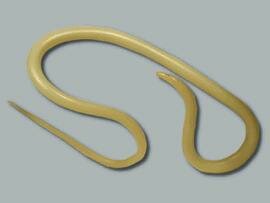
The roundworm has some interesting characters, however there are few. The roundworm is motile, but in can only dramatically squirm around almost in an, "S", formation. This method of transportation, however, doesn't cover a long distance at all. Other features like the roundworms digestive system, its nervous system, and its non-violent way of reproduction all contribute to the roundworms way of living.

-Being Curious and Asking Questions-
One question I have is why do roundworms move in that dramatic way? How did it help the roundworm become selected over other evolutions of the flatworm? Does it not take a lot of energy to go through these almost seizure-like actions?
Earthworm (phylum annelida)

-Evolution/Natural Selection-
The earthworm is known to have evolved from the roundworm. The earthworm has a segmented body. Remarkably, each segment is almost an exact replica of one another, each containing the same muscles, excretory, nervous systems. Each segment is also considered to be an independent animal. It is a well-known fact that earthworms are good for gardens due to their ability to digest harsh amounts of metals in the soil, which help plants grow, but did you know they had to evolve to make it happen. Numerous amounts of earthworms died to extreme conditions of the polluted soil, however, the species that could tolerate the harsh environment, thus became selected for.

-Requirements and Characteristics-
The earthworms main characteristic would be its ability to regenerate from detached segment. If you were to cut and earthworm in half, the earthworm would then become to separate animals. Earthworms digestive system is similar to that of the roundworms, but is more complex in the fact that the earthworms has gizzards to grind up the food for excretion. They have hearts in each segment that helps transport blood throughout the animal, as well as a closed circulation system.

-Being Curious and Asking Questions-
What event caused the roundworm to evolve causing it to form a segmented body? 
Why are there so many species of earthworms around the world?
Did earthworms evolve into arthropods? If so what caused them to need to change?

Grasshopper (phylum arthropoda)

-Evolution/Natural Selection-
The grasshopper has been around for an exceptionally long time. The are said to have been present since triassic times, due to the fossils found and some being encased in amber. The grasshoppers hind legs is a huge factor in how the grasshopper has been successful. Although grasshoppers and locusts are known to be different, they are the same species. Their ability to decimate crops in swarms and their ability to fly are another two reasons the locust/grasshopper has been around since biblical times.

-Requirements and Characteristics-
The grasshopper has mandibles for chewing up the various plants and crops it digests. Grasshoppers also have spiracles on their abdomen which act as,"Breathing holes," to aid in respiration. Grasshoppers are notoriously renowned jumpers which greatly aid them in escaping predators as well as quickly searching for more food. The grasshopper also was the first animal to exhibit an exoskeleton. The grasshoppers open circulation system and their sound sensing nervous system greatly aid them in finding mates.

-Being Curious and Asking Questions-
Grasshoppers = Locusts, what?
Apparently irritating a grasshopper transforms them into locusts, is this true?
How come grasshoppers depend more on their legs, while locusts are primarily known to fly?

Starfish (phylum echinodermata)

-Evolution/Natural Selection-
Starfish comes from an almost standalone phylum, so it's difficult to determine what it evolved from or how it came to be. 

-Requirements and Characteristics-
The starfish is a complex organism compared to the above animals that I have dissected. It has an internal skeleton. The starfish digests food by squirting digestive enzymes on its prey, and then proceeding to suck the prey inside of its mouth, which leads to its complete digestive system. Its digestive system consists of a small esophagus called an oesophagus which leads into its two stomachs, and its aboral anus. The starfish also has eyes on each of its radial arms.

-Being Curious and Asking Questions-
How come some starfish have more than 5 arms? How does this benefit it?
Do all starfish digest its prey the same way? Can some just simply eat their food?
Grass Frog (phylum vertebrata, class amphibia). 
http://moeizebio11.blogspot.ca/2014/01/frog-dissection.html


-Evolution/Natural Selection-
Frogs have evolved in countless ways. Some live in trees, jungles, grass, and even water. Frogs have been found to have evolved from lobe-finned fish or bony fish, similarly to other amphibians. Frogs have numerous characteristics that helped the various species become successful. Some characteristics that a good majority of common frogs share is their incredible hindlegs. Like the grasshopper frogs have inherited a powerful hind leg that can propel the frog to great distances as well as heights. Frogs also have a way of communicating known around the world as ,"croaking." Finally, frogs have an almost elastic stretchy tongue that aids them in snatching up their invertebrate prey.

-Requirements and Characteristics-
Frogs have a digestive system strikingly similar to that of humans. It works the same way as ours too. Frogs are known to reproduce via laying eggs in water, since their offspring can only swim. Some frogs transfer sperm to their mate through a process known as amplexus. Frogs also have a closed circulation system consisting of lungs, a heart and many blood vessels. Frogs also have an internal skeleton as well as a nervous system also similar to humans, they too have brains.


Frogs transferring sperm the amplexus way

-Being Curious and Asking Questions-
What caused the lobe-finned fish the need to grow legs and live on the land?
Whats the difference between frogs and toads?


Rat Dissection


The external features of the rat, were quite shocking. Firstly, the rat exhibited white plastered fur, and a stiff body. The rat had nails on its withered looking hand. The rats skin was pink, and due to the testes shown in the uppermost picture, that the rat was male.

The rat's interior was filled with water and was tough to cut. Otherewise the anatomy was similar to that of the frog's.

The rat's anatomy


Thursday, January 16, 2014

Cindaria

Feeding
Cnidaria are filter feeders, which means they absorb the water around them hoping that some food gets sucked in as well, they food then gets absorbed by the cells inside. Certain species of cnidaria are predators, they use their tentacles to entangle their prey, and then eat them using their mouth. With the help of digestive fluids, the animals procceed to, almost dissolve their prey inside them.
Respiration
Cnidaria possess no repiratory organs, therefore, they respirate by absorbing oxygen from the water and then releasing carbon dioxide out. Since the water is full of oxygen, and cnidaria have an easy way to get oxygen, so they have many antioxidants to diminish the excess oxygen
Circulation
Cnidaria's Circulates when the water in its digestive cavity becomes bland. It replaces the water along with nutrients that have not been absorbed. 
Excretion
The cnidaria digests food once it's in its digestive cavity. It digests food by releasing digestive enzymes that dissolve the food into," mush." The, "mush," is then circulated around the cnidaria and absorbed. The indigestable remains of the prey is released along with the bland water in its digestive cavity.
Nervous System
Cnidaria lack a brain or any kind of nervous system. Instead they have a nerve net that is composed of nerve cells. The cnidaria's nerve cells are stimulated by odors and motor neurons, which tell the cnidaria when to contract. When the cnidaria senses what it deems as a hostile odor, its muscles contract and expand in order to flee from its prey.
Movement
The cnidaria use jet propulsion to swim along the ocean. The muscles inside the rim of the aboral end, squeeze water out to propel the fish forward. However, their muscles are rather weak and can not fight against currents.
Reproduction
Cnidarians can reproduce both sexually and asexually. The cnidarians sexual reproduction is complicated, it involves a larva swimming until it fines an appropriate place. It then becomes a polyp and splits into disks, that then become juvenile medusae. The medusae swims off until it grows into a mature cnidaria. The polyp remains there and continues to produce juvenile medusae.

Monday, January 13, 2014

Frog Dissection

The frog was slimy, with bumpy skin. The frog was green with black spots and a black strip along the middle of its back.

The frogs webbed-feet

The frogs stomach. The frogs stomach was supposed to have a defined abdomen, however ours did not.

The frogs organs

Underneath the surface organs

The good stuff