Assignment Completion- Weight 30%
Letter Grade: B
In the plant unit, I failed to complete a few major blogposts, however I made sure to do everything listed in the plant unit, and I believe I may have missed 1 or 2 posts in the bacteria/virus unit. Otherwise, the other assigned projects, notes, worksheets, and stuff I believe are mostly completed.
Assignment Quality- Weight 40%
Letter Grade: A
I feel that although I may not have completed every blogpost, the ones I have done I've done to the best of my capabilities. I've completed them carefully and thoughtfully, although I may not be, presently, able to recall from some of the earlier works, I do recall certain,"highlights."
Skills- Weight 10%
Letter Grade: A
Another one of the things I thoroughly enjoyed about this class was the countless amount of times we did unconventional activities to show our way of learning and not being bound to test after test. Be it cut & paste notes, colouring sheets, microscope observations, researching unique organisms, dissections, or even pinecone crafting... These various ways of expressing our learning albeit quirky or unconventional had the same if not more academic value of any test or worksheet I've done in previous classes.
Your Learning- Weight 20%
Letter Grade: A
Continuing on with my thoughts in the skills portion. I feel that I get more out of learning when I learn something I want to learn, rather than having the curriculum crammed down my throat. This is my learning and I'm glad I was able to learn the way that I felt best. Actually being interested in what i'm doing doesn't happen to often, but I found myself in this alien situation more than I thought I'd ever be for a science class.
OVERALL PERCENTAGE: 94%
Monday, January 20, 2014

Biology Interview
The big ideas of Biology 11:
- Evolution and Natural Selection
- Requirements of living things
- Curiosity and Inquiry
Question #1
How can you show your learning of these big ideas throughout the course? Be ready to show your best examples.
Evolution and Natural Selection
http://moeizebio11.blogspot.ca/2014/01/first-final-question-animal-kingdom.html
I chose this because, I found it interesting how each phylum we looked at seemed to progressively get more, and more complex. I noticed this especially when we first started looking at sponges to cnidaria, to flatworms and so on and so forth. What I find more intriguing though, is the fact that even though certain species of say roundworms evolved to earthworms, roundworms are still around and as prominent as ever. Even though other species evolved to become other species, the origin organism, in some cases still exists.
Requirements of Living Things
http://moeizebio11.blogspot.ca/2014/01/first-final-question-animal-kingdom.html
Despite having numerous amount of evidence for the requirement of living things, I've decided to reuse the blog post from the evolution and natural selection section because I feel it covers my best examples on the subject. Similarly with using the dissections to see how they could have evolved, or what characteristic got them selected for. I feel that the anatomy and different essential functions for living are well represented throughout the external and internal evolution of each organism we progressively looked at.
Curiosity and Inquiry
http://moeizebio11.blogspot.ca/2013/10/interesting-find.html
As for everything that involves choosing a blogpost that I feel, I was truly curious about something, I have chosen the,"Interesting Find," blog post. I've said it many times before in previous blogs, but I truly feel this was a genuine time in my life where I noticed something interesting, and decided to learn what it was. Who knew it would be something so interesting, which eventually lead to numerous other amazing things in the world, or most interesting organism blogs. And to think I discovered it right outside my doorstep, just proves how biology is everywhere and will follow you throughout the rest of your life.
Question #2
How do you see the world differently after taking Biology? Discuss.
After taking this biology course I just seem to notice more things about this world. What's really cool though is that if I'm feeling happy and my chins up towards the sky, I'm going to notice the sky, clouds, birds. On the contrary, if I wear a frown and my heads pointed down, i'm going to notice, soil, insects, grass, moss or ferns. Wherever I look for the rest of my life, I'll be able to use what I've learned these past few months to notice things about life everywhere or anywhere I go.
Re-finding Nemo
When I first watched," Finding Nemo," I watched like most people would, for entertainment, and satisfaction, however, now armed with newfound knowledge of the world of living things I can revisit my childhood memory as an uncanny learning experience. While watching the movie I looked at it in more of an academic way, trying to notice things that I may have learned in class. Some of which, include the purple flatworm at the beginning of the film, which i always thought was just a sea slug or a mini manta ray. I also noticed that the shark reacted to the scent of blood and hungered for the fish he promised himself he'd boycott eating. Another thing I noticed was the jellyfish, which took me back to the cnidaria unit, which ironically I was doing it while the movie was playing. Some things I wonder are if fish could even communicate like how they do in the film. Can fish ask for directions or warn their young through any sort of sounds, like whales can? Another thing I wonder is if fish can even bleed like how they did in the movie to arouse the shark. And finally, I wonder if fish are aware of the danger of humans, and if they were do they hate us or are they afraid?
Second Final Question - Interesting Organism Reflection
Celebrity Named Organism
http://moeizebio11.blogspot.ca/2013/11/sylvilagus-palustris-hefneri.html


http://moeizebio11.blogspot.ca/2013/11/sylvilagus-palustris-hefneri.html
Interesting Porifera
http://moeizebio11.blogspot.ca/2013/12/bottlenose-dolphin-and-itsmuzzle.html
Amazing Arthropod
Interesting Plant
Amazing Thing in the World
My Interesting Find
My favourite blogpost was the, the interesting find one, because it demonstrated exactly what biology should be about. Looking at the world, finding something interesting, being curious, and ultimately learning about or discovering something new. This method of mating is unique in the fact that it allows both slugs to be safe from some predators as they mate and form almost like a cocoon. Slugs must have evolved to make this possible due to predators consistently eating their offspring.
First Final Question - Animal Kingdom
Throughout the animal unit in biology 11 we have dissected numerous things. Some of which roundworm (phylum nematoda), an earthworm (phylum annelida), a grasshopper (phylum arthropoda), a starfish (phylum echinodermata) and a grass frog (phylum vertebrata, class amphibia).
I will explain how these animals, evolved/naturally selected, their unique characteristics that make them living, and finally I will share any questions I had about the various animals
Roundworm (phylum nematoda)


Grass Frog (phylum vertebrata, class amphibia).
http://moeizebio11.blogspot.ca/2014/01/frog-dissection.html

-Being Curious and Asking Questions-
I will explain how these animals, evolved/naturally selected, their unique characteristics that make them living, and finally I will share any questions I had about the various animals
Roundworm (phylum nematoda)
-Evolution/Natural Selection-
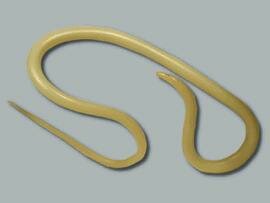
The roundworm is thought to have evolved from the flatworm. Roundworms evolved to inherit a circulatory system, as well as the ability to not only live in the ocean, but on land, people, and even plants. They also have a complete digestive system as well as a nervous system, over their ancestors.
-Requirements and Characteristics-
The roundworm has some interesting characters, however there are few. The roundworm is motile, but in can only dramatically squirm around almost in an, "S", formation. This method of transportation, however, doesn't cover a long distance at all. Other features like the roundworms digestive system, its nervous system, and its non-violent way of reproduction all contribute to the roundworms way of living.
-Being Curious and Asking Questions-
One question I have is why do roundworms move in that dramatic way? How did it help the roundworm become selected over other evolutions of the flatworm? Does it not take a lot of energy to go through these almost seizure-like actions?
Earthworm (phylum annelida)
-Evolution/Natural Selection-
The earthworm is known to have evolved from the roundworm. The earthworm has a segmented body. Remarkably, each segment is almost an exact replica of one another, each containing the same muscles, excretory, nervous systems. Each segment is also considered to be an independent animal. It is a well-known fact that earthworms are good for gardens due to their ability to digest harsh amounts of metals in the soil, which help plants grow, but did you know they had to evolve to make it happen. Numerous amounts of earthworms died to extreme conditions of the polluted soil, however, the species that could tolerate the harsh environment, thus became selected for.
-Requirements and Characteristics-
The earthworms main characteristic would be its ability to regenerate from detached segment. If you were to cut and earthworm in half, the earthworm would then become to separate animals. Earthworms digestive system is similar to that of the roundworms, but is more complex in the fact that the earthworms has gizzards to grind up the food for excretion. They have hearts in each segment that helps transport blood throughout the animal, as well as a closed circulation system.
-Being Curious and Asking Questions-
What event caused the roundworm to evolve causing it to form a segmented body?
Why are there so many species of earthworms around the world?
Did earthworms evolve into arthropods? If so what caused them to need to change?
Grasshopper (phylum arthropoda)
-Evolution/Natural Selection-
The grasshopper has been around for an exceptionally long time. The are said to have been present since triassic times, due to the fossils found and some being encased in amber. The grasshoppers hind legs is a huge factor in how the grasshopper has been successful. Although grasshoppers and locusts are known to be different, they are the same species. Their ability to decimate crops in swarms and their ability to fly are another two reasons the locust/grasshopper has been around since biblical times.
-Requirements and Characteristics-
The grasshopper has mandibles for chewing up the various plants and crops it digests. Grasshoppers also have spiracles on their abdomen which act as,"Breathing holes," to aid in respiration. Grasshoppers are notoriously renowned jumpers which greatly aid them in escaping predators as well as quickly searching for more food. The grasshopper also was the first animal to exhibit an exoskeleton. The grasshoppers open circulation system and their sound sensing nervous system greatly aid them in finding mates.
-Being Curious and Asking Questions-
Grasshoppers = Locusts, what?
Apparently irritating a grasshopper transforms them into locusts, is this true?
How come grasshoppers depend more on their legs, while locusts are primarily known to fly?
Starfish (phylum echinodermata)
-Evolution/Natural Selection-
Starfish comes from an almost standalone phylum, so it's difficult to determine what it evolved from or how it came to be.
-Requirements and Characteristics-
The starfish is a complex organism compared to the above animals that I have dissected. It has an internal skeleton. The starfish digests food by squirting digestive enzymes on its prey, and then proceeding to suck the prey inside of its mouth, which leads to its complete digestive system. Its digestive system consists of a small esophagus called an oesophagus which leads into its two stomachs, and its aboral anus. The starfish also has eyes on each of its radial arms.
-Being Curious and Asking Questions-
How come some starfish have more than 5 arms? How does this benefit it?
Do all starfish digest its prey the same way? Can some just simply eat their food?Grass Frog (phylum vertebrata, class amphibia).
http://moeizebio11.blogspot.ca/2014/01/frog-dissection.html
-Evolution/Natural Selection-
Frogs have evolved in countless ways. Some live in trees, jungles, grass, and even water. Frogs have been found to have evolved from lobe-finned fish or bony fish, similarly to other amphibians. Frogs have numerous characteristics that helped the various species become successful. Some characteristics that a good majority of common frogs share is their incredible hindlegs. Like the grasshopper frogs have inherited a powerful hind leg that can propel the frog to great distances as well as heights. Frogs also have a way of communicating known around the world as ,"croaking." Finally, frogs have an almost elastic stretchy tongue that aids them in snatching up their invertebrate prey.
-Requirements and Characteristics-
Frogs have a digestive system strikingly similar to that of humans. It works the same way as ours too. Frogs are known to reproduce via laying eggs in water, since their offspring can only swim. Some frogs transfer sperm to their mate through a process known as amplexus. Frogs also have a closed circulation system consisting of lungs, a heart and many blood vessels. Frogs also have an internal skeleton as well as a nervous system also similar to humans, they too have brains.
 |
| Frogs transferring sperm the amplexus way |
-Being Curious and Asking Questions-
What caused the lobe-finned fish the need to grow legs and live on the land?
Whats the difference between frogs and toads?
Rat Dissection


The external features of the rat, were quite shocking. Firstly, the rat exhibited white plastered fur, and a stiff body. The rat had nails on its withered looking hand. The rats skin was pink, and due to the testes shown in the uppermost picture, that the rat was male.

The rat's interior was filled with water and was tough to cut. Otherewise the anatomy was similar to that of the frog's.

The rat's anatomy
Thursday, January 16, 2014
Cindaria

Feeding
Cnidaria are filter feeders, which means they absorb the water around them hoping that some food gets sucked in as well, they food then gets absorbed by the cells inside. Certain species of cnidaria are predators, they use their tentacles to entangle their prey, and then eat them using their mouth. With the help of digestive fluids, the animals procceed to, almost dissolve their prey inside them.
Respiration
Cnidaria possess no repiratory organs, therefore, they respirate by absorbing oxygen from the water and then releasing carbon dioxide out. Since the water is full of oxygen, and cnidaria have an easy way to get oxygen, so they have many antioxidants to diminish the excess oxygen
Circulation
Cnidaria's Circulates when the water in its digestive cavity becomes bland. It replaces the water along with nutrients that have not been absorbed.
Excretion
The cnidaria digests food once it's in its digestive cavity. It digests food by releasing digestive enzymes that dissolve the food into," mush." The, "mush," is then circulated around the cnidaria and absorbed. The indigestable remains of the prey is released along with the bland water in its digestive cavity.
Nervous System
Cnidaria lack a brain or any kind of nervous system. Instead they have a nerve net that is composed of nerve cells. The cnidaria's nerve cells are stimulated by odors and motor neurons, which tell the cnidaria when to contract. When the cnidaria senses what it deems as a hostile odor, its muscles contract and expand in order to flee from its prey.
Movement
The cnidaria use jet propulsion to swim along the ocean. The muscles inside the rim of the aboral end, squeeze water out to propel the fish forward. However, their muscles are rather weak and can not fight against currents.
Reproduction
Cnidarians can reproduce both sexually and asexually. The cnidarians sexual reproduction is complicated, it involves a larva swimming until it fines an appropriate place. It then becomes a polyp and splits into disks, that then become juvenile medusae. The medusae swims off until it grows into a mature cnidaria. The polyp remains there and continues to produce juvenile medusae.
Monday, January 13, 2014
Frog Dissection

The frog was slimy, with bumpy skin. The frog was green with black spots and a black strip along the middle of its back.

The frogs webbed-feet

The frogs stomach. The frogs stomach was supposed to have a defined abdomen, however ours did not.

The frogs organs

Underneath the surface organs

Thursday, January 9, 2014
Grasshopper Dissection

Surprisingly the grasshopper was black, and quite small, although its exoskeleton was tough but almost paper thin

The grasshoppers head including its compound eye and antennae

The grasshoppers Jumping Leg

The inside contain many liquids and brown strands
Starfish Dissection

The starfish exhibited a spiny texture, and was rather tough to cut through, but the skin was relatively thin

The oral side is also spiny, with a groove-like depression in the middle of each arm

..yeah
Tuesday, January 7, 2014
Pistol Shrimp

Alpheus bellulus
The pistol shrimp is apart of the snapping shrimp family. Their unique characteristic is their enlarged asymmetrical claw. The shrimp cocks their claw similarly to a pistol, then snaps the larger portion shut creating almost a sonic boom, the snap then produces a bubble that's hotter than the sun. This sonic boom is an extremely potent offense when catching prey as it stuns or even kills targets from a distance. The sound made from the claw is louder than a sonic boom and can interfere with sonar communication, it is known to be a major cacophony in the ocean.
The pistol shrimp's powerful super sonic,"pistol," as well as it's unique mutualism with the goby, are prime strengths that helped it become selected over other species of shrimp.
Subscribe to:
Posts (Atom)